Private-Label Auto Parts Packaging Requirements
Prepare a packaging enquiry that your purchasing and receiving teams can check. Tie authorized artwork, buyer codes, barcode data and carton requirements to the selected product references.
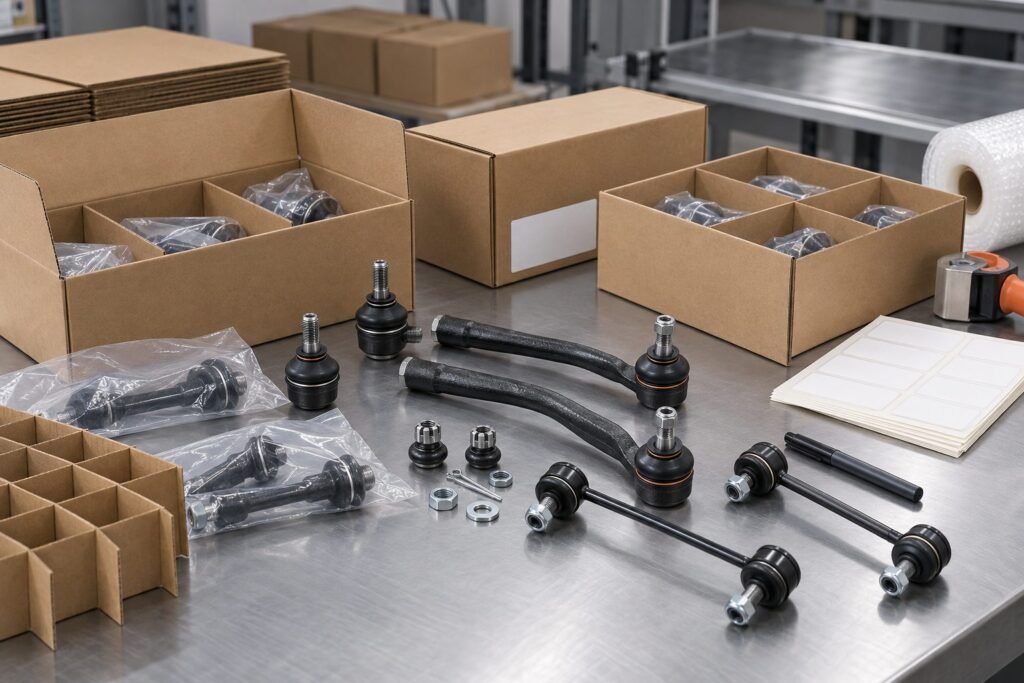
Explore Products and Buying Requirements
Select the construction, application or purchasing task that matches your buying list. Each route explains the information needed for a quotation; reference-specific availability and fitment are reviewed before an order.
Auto parts barcode and label requirements
Define barcode and product-label requirements alongside the selected reference list. Keep your internal SKU, supplier code and any retail identification separate so each identifier has a clear purpose.
Export carton packing requirements
Prepare export-carton requirements for your chosen parts and distribution route. State unit packing, carton quantity and any handling limits so packing costs are compared on a consistent basis.
Unit Box, Product Label and Carton Are Different Approvals
Your unit box helps identify the product at the receiving or distribution point. Specify the buyer SKU, product description, artwork version, language and any application wording you expect to print. Final contents should be agreed before the box promises accessories or a complete kit.
Your product label needs a clear relationship to the actual supplied reference. Keep supplier codes, buyer SKUs and batch information distinguishable. A change to the proposed item can require a corresponding label or artwork review.
Your master carton serves handling and receiving tasks. State the unit count, reference-mixing rule, gross-weight or size limits, shipping marks and pallet preferences that apply to your operation.
Barcodes Need Correct Data as Well as Readability
Provide authorized identifiers and the required symbology, label dimensions and position. Printing a code does not establish ownership or registration rights. If your distribution route has specific barcode rules, identify them in the purchasing file.
Check the encoded value and its relationship to the buyer SKU and supplied item. A label can scan successfully while identifying the wrong reference. Unit and carton identifiers may serve different tasks and should be approved against their intended use.
Prepare the Packing Specification
Use one line per reference. Describe the unit contents, box and label, then the carton and shipping requirements. Keep your product and packing files on matching versions.

Artwork Proof and Product Evidence Are Separate
Use a controlled approval step for artwork, dimensions, print position and the code-to-item mapping. State who can approve changes and keep the approved proof with the order. A visually polished package does not replace application, construction or performance evidence.
Do not use third-party brand names, certification marks or performance statements without the relevant rights and evidence. Product claims should relate to the accepted item and supporting information, rather than a general supplier presentation.
Confirm Feasibility Before Printing
Request packing minimums, tooling or printing charges, artwork preparation responsibilities and the proposed timing. These terms depend on the selected references and suppliers. Confirm whether neutral, buyer-brand or supplier-standard packing is the agreed route.
For a mixed order, identify which cartons may contain different references and how the contents will appear on the packing list. Packing changes can affect unit count, handling and shipment cost, so they belong in the quotation before an order is agreed.
Keep Repeat Orders on the Accepted Version
Retain the accepted product identity, packaging version, artwork proof and receiving requirements. Review any proposed reference, carton quantity, printed wording or supplier change before releasing the next order.
If a sample is intended to approve packaging, state that purpose clearly. Packaging approval is different from functional qualification of a product sample; the required checks and responsible reviewers should match the decision.
Prepare a Comparable Quotation
Send the information you already have. Mark unknown fields so the open questions can be reviewed with the proposed supply option.
- Complete reference and its source
- Vehicle or engine application
- Quantity per item
- Receiving country and packing requirements
What happens next? The buying list is reviewed for missing information. Product identity, available evidence, quantities, packing and delivery scope need agreement before an order. A submitted enquiry is not a confirmed supply or fitment approval.