Export carton packing requirements for Aftermarket Buyers
Prepare export-carton requirements for your chosen parts and distribution route. State unit packing, carton quantity and any handling limits so packing costs are compared on a consistent basis. For auto parts export packaging enquiries, keep the reference, intended application and quantity together before comparing supply options.
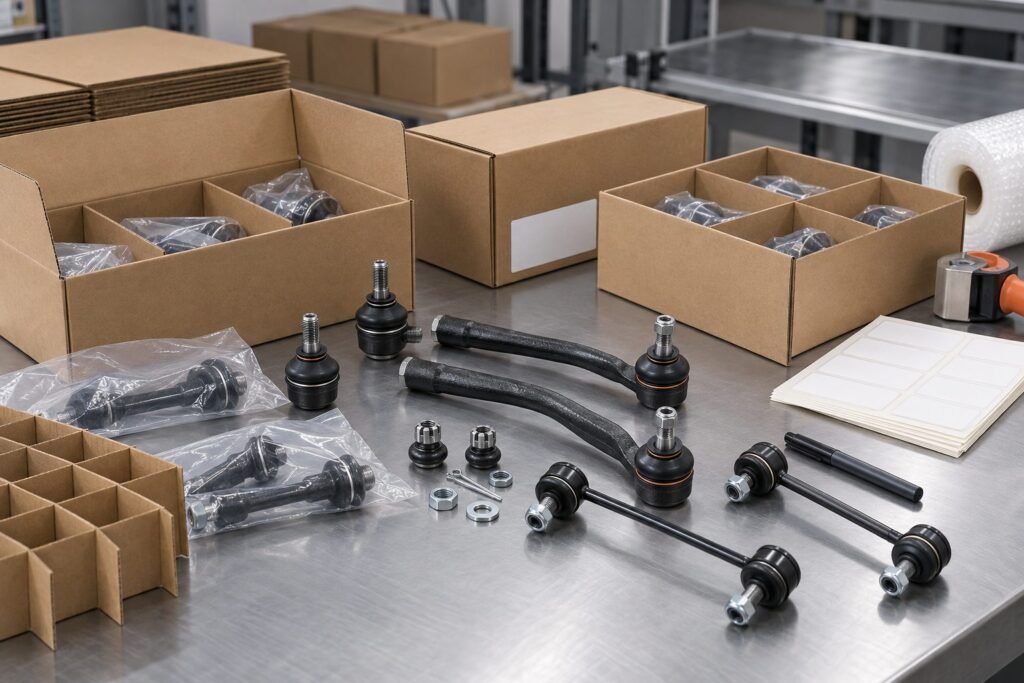
Export carton packing requirements: Define the Requested Scope
Record carton dimensions or limits, gross-weight requirements, shipping marks and pallet preferences. For mixed references, define whether cartons may contain different items and how they should be labelled.
Receiving requirements
State size, weight or handling limits supplied by your receiving operation; no generic packing limit is assumed.
Mixed cartons
Agree whether references may be mixed and how the contents will be identified on the carton and packing list.
Specification and Application Information
Use the fields below to prepare an identifiable buying line. Attach the information you already have and mark what still needs review. No dimensions, test results or application approval are inferred from the representative image.
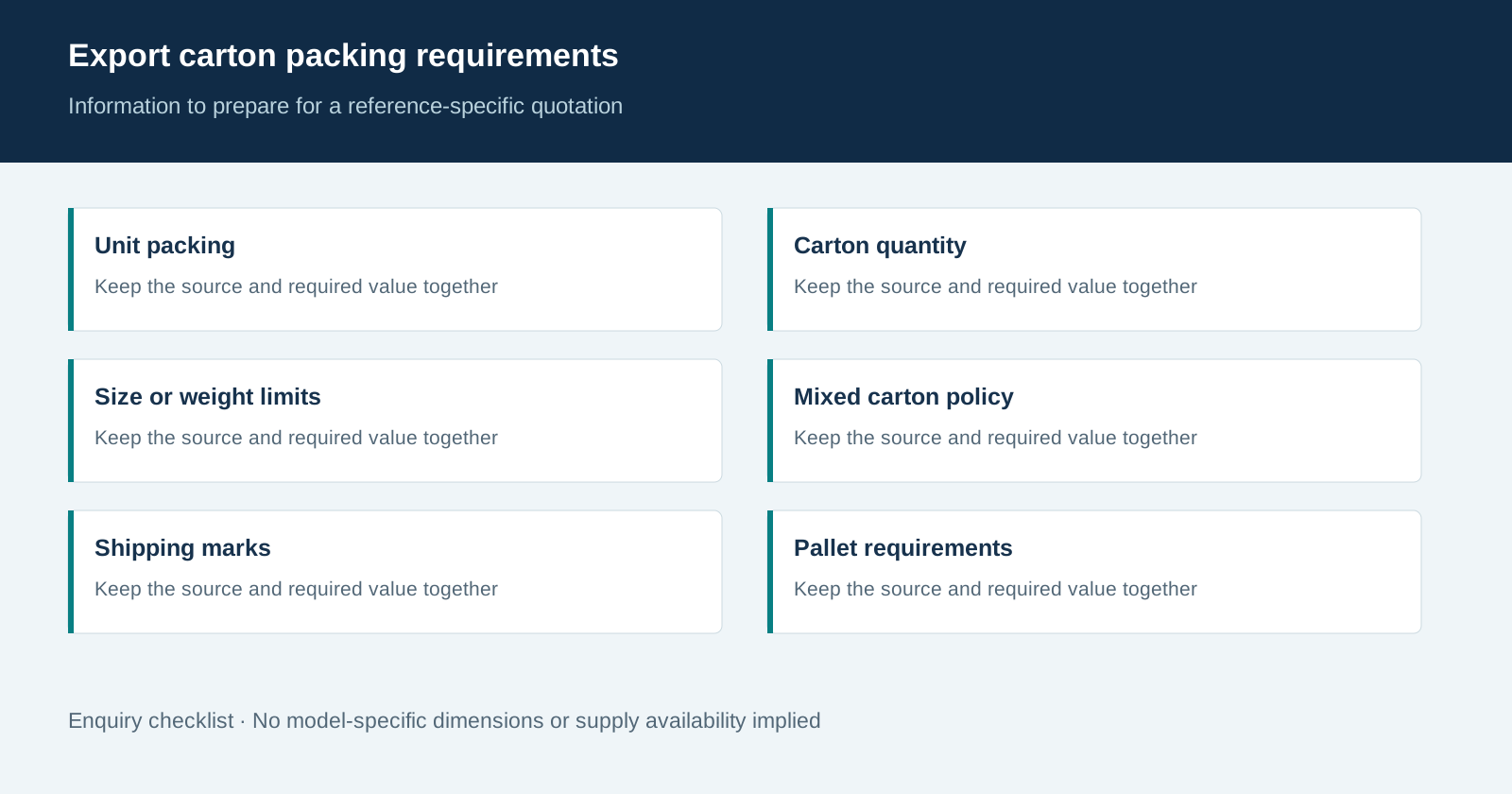
| Field | What your purchasing team should include |
|---|---|
| Unit packing | State your required information and attach supporting drawings or records where available. |
| Carton quantity | State required units on the same line as the reference or defined service. |
| Size or weight limits | State your required information and attach supporting drawings or records where available. |
| Mixed carton policy | State your required information and attach supporting drawings or records where available. |
| Shipping marks | State your required information and attach supporting drawings or records where available. |
| Pallet requirements | State your required information and attach supporting drawings or records where available. |
A Purchasing Decision to Resolve
Your receiving warehouse limits carton weight, while a supplier normally packs by a fixed unit count. Compare the proposed carton configuration with that limit before finalizing the order. Packing changes may affect carton count, handling and shipment cost. This is an illustrative buying situation, not a customer case study.
Evidence and Sample Review
Treat product identity, artwork, labels and transport packing as connected approvals with different evidence needs. Define what your buyer code identifies and which reference or packing version it belongs to. A visually polished package should still give the receiving team enough information to identify the supplied item correctly.
Review the proof against your authorized artwork and data, then specify the checks required on the actual packed goods. Where codes are used, check both readability and the code-to-item mapping. Carton limits, label placement and language requirements should come from your receiving operation rather than a generic assumption.
Confirm packing proposals and inspection responsibilities before shipment. Transport protection and packaging suitability depend on the product and route; a generic carton photograph does not prove packing performance.
Compare the Same Scope Before the Price
Identification
Compare the complete reference, application or service scope and source documents. Record any proposed substitute separately. A catalogue match or a similar photograph is not the same as an accepted replacement.
Supplied contents
List the requested components or deliverables, quantities and packing. Keep a single item, kit, assembly and coordination service distinguishable so you compare the same receiving unit.
Commercial scope
Request minimum quantities, item and packing costs, evidence availability, sample arrangements and delivery responsibilities. Record exclusions and unresolved requirements before deciding which offer to review further.
Packing and Range Identification
Describe unit boxes, inner packs, cartons and pallet requirements separately. Specify mixed-reference rules, shipping marks and the packing-list information you need. The final packing proposal, printing charges and feasibility depend on the selected goods and suppliers.
Claims and Changes
Keep the approved artwork, identifiers and packing specification under version control. Changes to a reference, carton quantity or printed claim should be reviewed before the next order. Brand ownership, barcode rights and product-performance evidence are separate questions; printing does not establish those rights or claims.
From Buying List to an Agreed Order
1. Identify the requested item
Send complete references, source records, quantities and the intended application or service. Keep missing information visible so the request is reviewed rather than guessed.
2. Review the proposal
Compare the proposed reference, evidence, supplied contents and open questions. Agree whether a sample, drawing review or specialist evaluation is needed before approval.
3. Confirm the commercial scope
Set the accepted item or service, packing, price, payment, delivery responsibilities and claim terms in writing. Feasibility and timing depend on the agreed supply route.
4. Keep the order record
Retain the accepted reference, evidence and packing version. Review changes before repeat purchasing; a later alternative should not silently replace the item you approved.
Buyer Questions Before Quotation
Can carton quantity be customized?
Submit your requirements. Feasibility, cost and supplier constraints need review before an order is agreed.
What information should you send for export carton packing requirements?
Use the category-specific fields on this page. Keep the complete reference, requested quantity and supporting application or service information together. Mark any unknown items so they can be reviewed rather than silently assumed.
Can an attractive package confirm product quality?
No. Product evidence and packaging approval are separate reviews. A printed claim should match the actual accepted product information.
Can you request samples or a smaller trial scope?
Yes, you can submit a defined sample or trial enquiry. Availability, minimum quantities, sample charges, freight and acceptance requirements must be reviewed for the selected references; no standard free-sample or minimum-order promise is made.
What should a comparable quotation include?
The identified item or service, quantity, supplied contents, evidence status, packing, costs, timing, payment, delivery responsibilities and claim terms. Keep proposed alternatives separate until they have been reviewed.
Can you use your own labels or combine references?
Send authorized artwork, buyer codes, quantity by reference and packing requirements. Feasibility and charges depend on the proposed supply route. Combined enquiries do not override item-level minimums or application review.
Related Buying Routes
Compare the relevant construction and purchasing requirements before preparing your reference-based enquiry.
Prepare a Comparable Quotation
Send the information you already have. Mark unknown fields so the open questions can be reviewed with the proposed supply option.
- Unit packing
- Carton quantity
- Size or weight limits
- Mixed carton policy
What happens next? The buying list is reviewed for missing information. Product identity, available evidence, quantities, packing and delivery scope need agreement before an order. A submitted enquiry is not a confirmed supply or fitment approval.