Coil-on-plug ignition coils for Aftermarket Buyers
Prepare a buying list for individual ignition coils mounted at the spark plug. Keep the complete reference and engine application beside each requested quantity, rather than treating every pencil-shaped coil as the same item. For coil on plug enquiries, keep the reference, intended application and quantity together before comparing supply options.
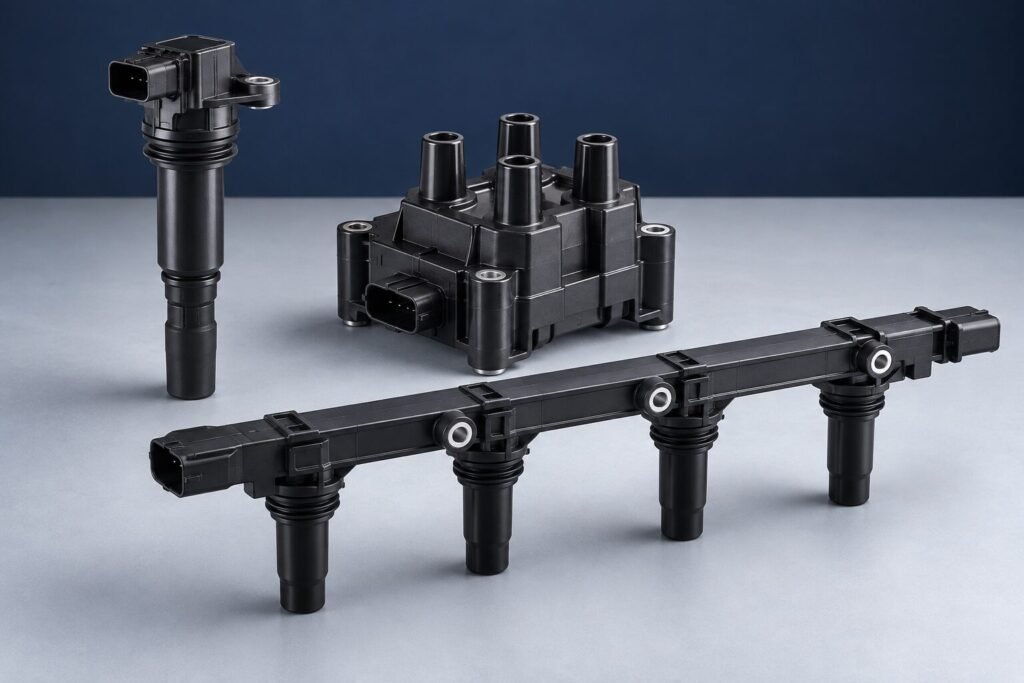
Coil-on-plug ignition coils: Define the Requested Scope
Record the connector arrangement, mounting points, overall dimensions and boot interface. Send views of the label and connector as well as the complete vehicle and engine details. Housing similarity alone cannot establish electrical or application compatibility.
Coil-on-plug scope
Individual coils and their boot interfaces are reviewed by reference. A requested full-engine set needs an explicit number of units; it is not inferred from the photograph.
Connector review
Provide both the connector face and the complete part label. Pin count is an identification field, not standalone electrical-compatibility approval.
Specification and Application Information
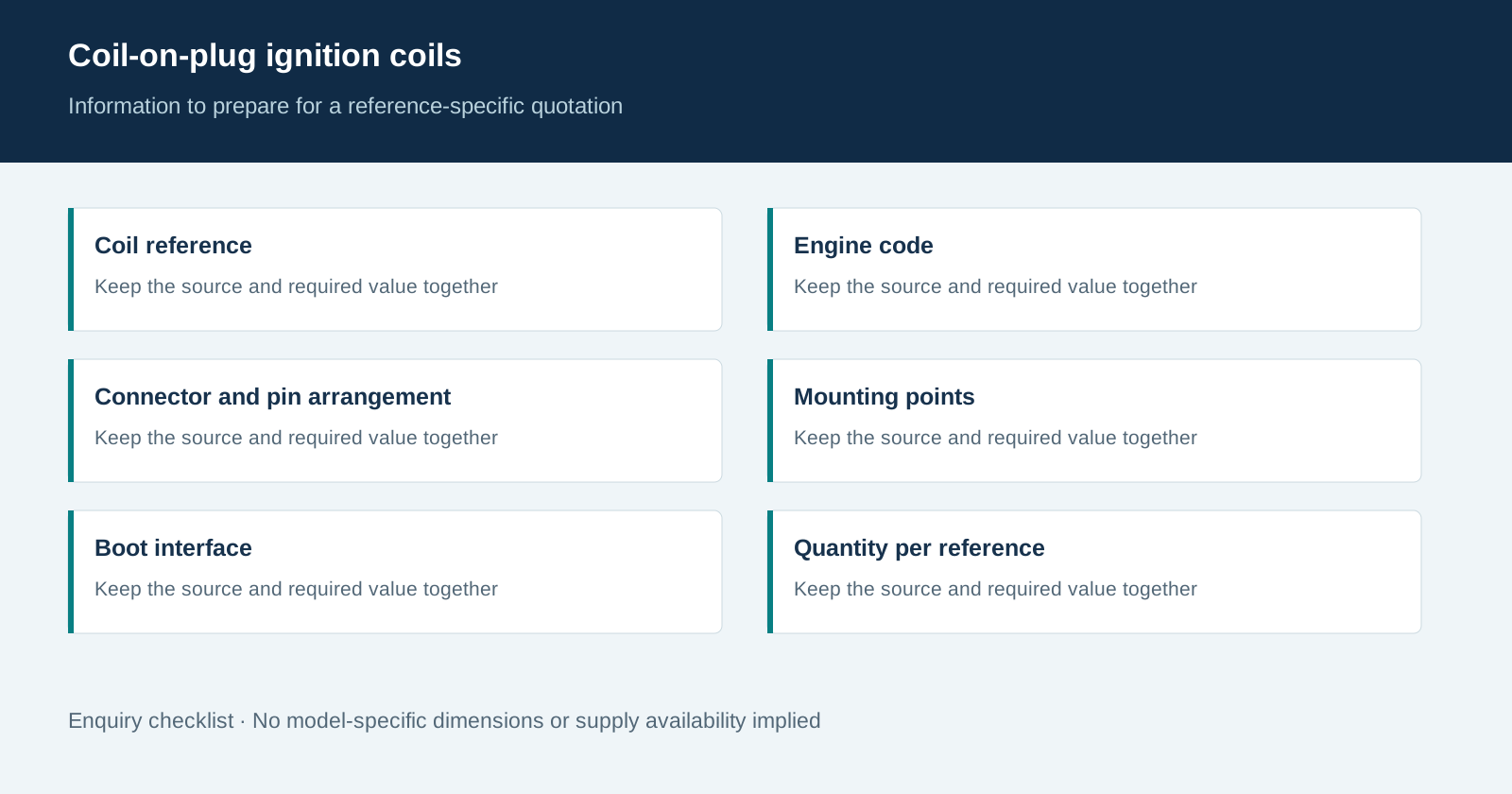
Use the fields below to prepare an identifiable buying line. Attach the information you already have and mark what still needs review. No dimensions, test results or application approval are inferred from the representative image.
| Field | What your purchasing team should include |
|---|---|
| Coil reference | Complete installed or supplier code, including suffix, with its source. |
| Engine code | The engine identification used to distinguish the requested application. |
| Connector and pin arrangement | Clear connector-face photos and available connection information. |
| Mounting points | Drawing or photographs showing the interfaces to be compared. |
| Boot interface | The contact and installed geometry that need review. |
| Quantity per reference | Units per identified item rather than a combined category total. |
A Purchasing Decision to Resolve
Your distributor is considering two pencil-style coils with similar housings. Keep them as separate enquiries until the engine, connector and mounting information have been reviewed. The shorter offer is not automatically the lower-cost replacement if the boot interface, evidence or package contents differ. This is an illustrative buying situation, not a customer case study.
Evidence and Sample Review
For your ignition coil range, ask which reference-specific application records and electrical or durability information are available. A company certificate, a catalogue claim and a test report serve different purposes. Record the item, sample or batch covered by a report and any limits in the method. Your technical reviewer should decide whether that evidence answers the intended application question.
Photographs can document reference labels, connectors, mounting points and visible condition. They do not confirm electrical performance. Define dimensional, functional or durability review with the relevant specialist, and keep the sample identity linked to the supplier proposal. A misfire or diagnostic code alone should not be recorded as proof that the supplied coil is defective.
Ask which application records, drawings and product-specific test information are available. Agree the sample review and the information needed for any later claim before approving an order.
Compare the Same Scope Before the Price
Identification
Compare the complete reference, application or service scope and source documents. Record any proposed substitute separately. A catalogue match or a similar photograph is not the same as an accepted replacement.
Supplied contents
List the requested components or deliverables, quantities and packing. Keep a single item, kit, assembly and coordination service distinguishable so you compare the same receiving unit.
Commercial scope
Request minimum quantities, item and packing costs, evidence availability, sample arrangements and delivery responsibilities. Record exclusions and unresolved requirements before deciding which offer to review further.
Packing and Range Identification
Protect exposed connectors and boots in the proposed unit packing. Define your label, buyer code, batch information and carton quantity. If you want complete sets, state the number and identity of the units in each set. Supplier feasibility, packing minimums and charges belong in the same enquiry.
Claims and Changes
Keep the installation application, batch identification, reported condition and diagnostic findings together when discussing claim terms. Agree what the supplier needs to review a complaint and what the commercial process covers. Avoid a general promise that every engine symptom qualifies for a replacement.
From Buying List to an Agreed Order
1. Identify the requested item
Send complete references, source records, quantities and the intended application or service. Keep missing information visible so the request is reviewed rather than guessed.
2. Review the proposal
Compare the proposed reference, evidence, supplied contents and open questions. Agree whether a sample, drawing review or specialist evaluation is needed before approval.
3. Confirm the commercial scope
Set the accepted item or service, packing, price, payment, delivery responsibilities and claim terms in writing. Feasibility and timing depend on the agreed supply route.
4. Keep the order record
Retain the accepted reference, evidence and packing version. Review changes before repeat purchasing; a later alternative should not silently replace the item you approved.
Buyer Questions Before Quotation
Can you confirm fitment from a connector photo?
A connector photo helps identification, but the engine application, complete reference and supporting product information must also be reviewed.
What information should you send for coil-on-plug ignition coils?
Use the category-specific fields on this page. Keep the complete reference, requested quantity and supporting application or service information together. Mark any unknown items so they can be reviewed rather than silently assumed.
Can a diagnostic trouble code approve a warranty claim?
No. Record the application, reported condition and diagnostic findings, then review them against the agreed claim process. A code alone does not prove the coil caused the fault.
Can you request samples or a smaller trial scope?
Yes, you can submit a defined sample or trial enquiry. Availability, minimum quantities, sample charges, freight and acceptance requirements must be reviewed for the selected references; no standard free-sample or minimum-order promise is made.
What should a comparable quotation include?
The identified item or service, quantity, supplied contents, evidence status, packing, costs, timing, payment, delivery responsibilities and claim terms. Keep proposed alternatives separate until they have been reviewed.
Can you use your own labels or combine references?
Send authorized artwork, buyer codes, quantity by reference and packing requirements. Feasibility and charges depend on the proposed supply route. Combined enquiries do not override item-level minimums or application review.
Public category information can help you frame an enquiry. It is separate from evidence for a Gerui quotation.
Related Buying Routes
Compare the relevant construction and purchasing requirements before preparing your reference-based enquiry.
Prepare a Comparable Quotation
Send the information you already have. Mark unknown fields so the open questions can be reviewed with the proposed supply option.
- Coil reference
- Engine code
- Connector and pin arrangement
- Mounting points
What happens next? The buying list is reviewed for missing information. Product identity, available evidence, quantities, packing and delivery scope need agreement before an order. A submitted enquiry is not a confirmed supply or fitment approval.