Stabilizer and sway bar links for Aftermarket Buyers
Send standard-replacement stabilizer-link enquiries by vehicle, position and current reference. Keep a single link, a left-and-right pair and a larger repair kit as separate purchasing units. For sway bar link enquiries, keep the reference, intended application and quantity together before comparing supply options.
Stabilizer and sway bar links: Define the Requested Scope
Record front or rear, side where relevant, centre distance, mounting threads and joint orientation. Include installation configuration and clear photos to support dimensional review.
Position and geometry
State axle, side and relevant geometry; keep link dimensions beside the vehicle reference.
Standard replacement
Modified or lifted installations require a separate suitability review. No universal modified-vehicle coverage is claimed.
Specification and Application Information
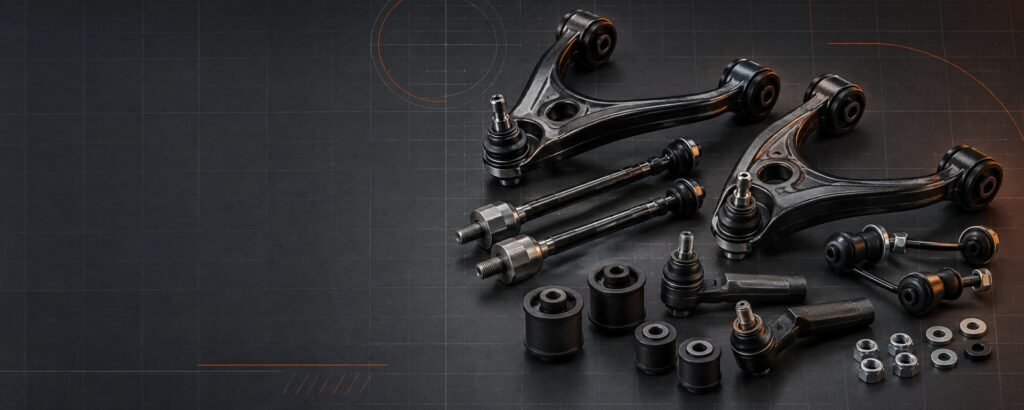
Use the fields below to prepare an identifiable buying line. Attach the information you already have and mark what still needs review. No dimensions, test results or application approval are inferred from the representative image.
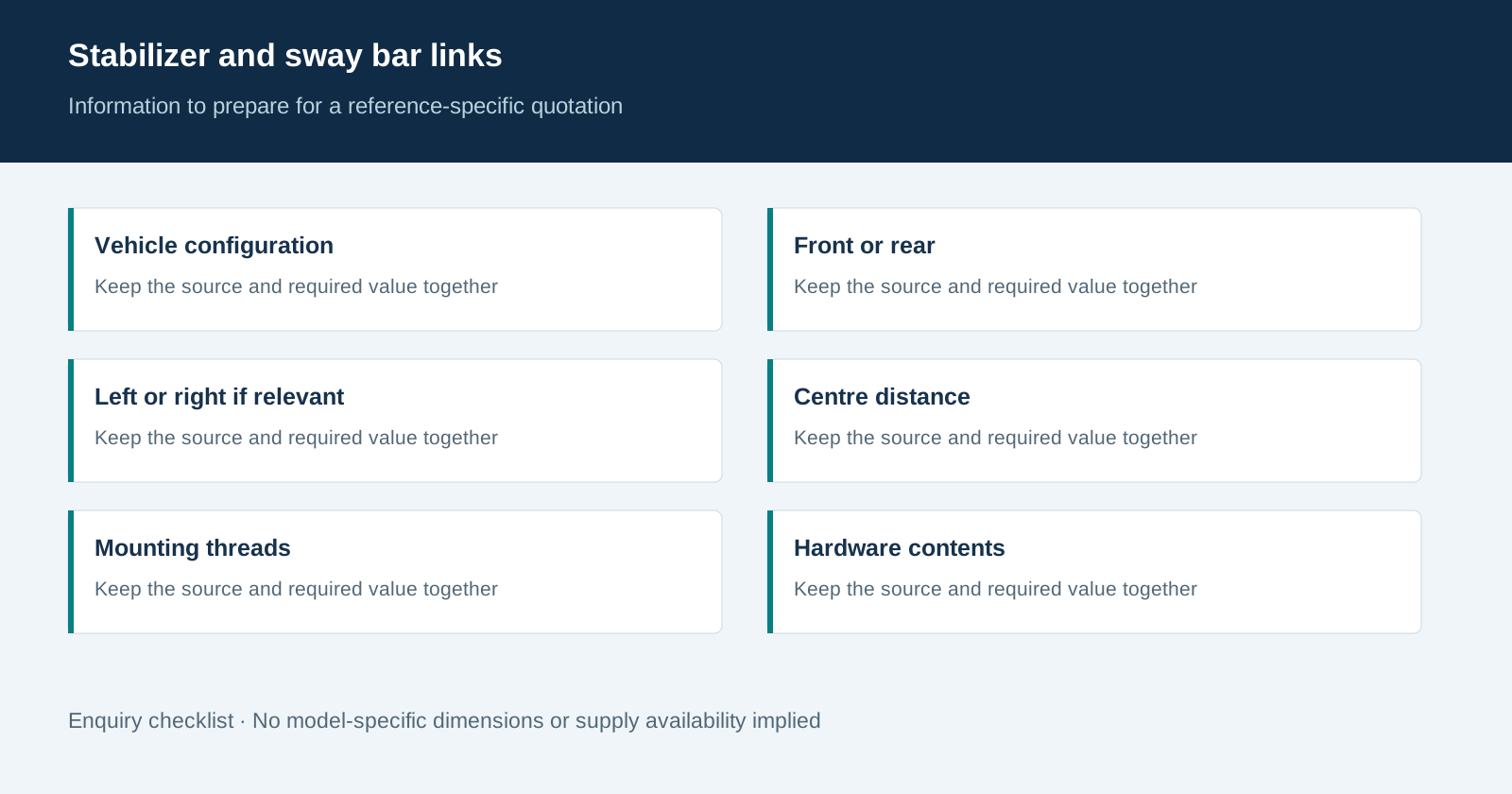
| Field | What your purchasing team should include |
|---|---|
| Vehicle configuration | State your required information and attach supporting drawings or records where available. |
| Front or rear | State your required information and attach supporting drawings or records where available. |
| Left or right if relevant | State your required information and attach supporting drawings or records where available. |
| Centre distance | State your required information and attach supporting drawings or records where available. |
| Mounting threads | State your required information and attach supporting drawings or records where available. |
| Hardware contents | State your required information and attach supporting drawings or records where available. |
A Purchasing Decision to Resolve
One offer quotes a single stabilizer link and another quotes a pair. Check whether the pair contains identical or handed components before comparing price. The required mounting hardware also needs a stated quantity, not an assumption based on the word kit. This is an illustrative buying situation, not a customer case study.
Evidence and Sample Review
Your steering and suspension comparison should link the reference, position, geometry and included components. Request drawings, relevant material information and available product evidence for the quoted item. A platform relationship or a visually similar part does not establish an accepted replacement; keep configuration and installation scope visible throughout the review.
Define which dimensions, joints, bushings, boots and hardware the sample review covers. Use a marked drawing or agreed inspection record to show the interfaces being reviewed. Standard replacement requests should not be silently changed to modification or performance products. Specialist evaluation is separate from a simple visual check.
Specify whether nuts or other mounting hardware are included. Request drawings, material information and available product evidence; standard replacements are not presented as verified lift-kit components.
Compare the Same Scope Before the Price
Identification
Compare the complete reference, application or service scope and source documents. Record any proposed substitute separately. A catalogue match or a similar photograph is not the same as an accepted replacement.
Supplied contents
List the requested components or deliverables, quantities and packing. Keep a single item, kit, assembly and coordination service distinguishable so you compare the same receiving unit.
Commercial scope
Request minimum quantities, item and packing costs, evidence availability, sample arrangements and delivery responsibilities. Record exclusions and unresolved requirements before deciding which offer to review further.
Packing and Range Identification
State single-piece, pair, set or repair-kit quantities explicitly. Identify handed parts and separate references clearly on the packing list. Request the proposed protection for exposed interfaces and boots, and define whether nuts or other hardware are packed with the main component.
Claims and Changes
Keep the accepted assembly contents, drawing version and application basis with the order. Any joint, bushing, material or geometry substitution needs review against that scope. Agree batch identification and the information needed for a later claim, including application and installation details where relevant.
From Buying List to an Agreed Order
1. Identify the requested item
Send complete references, source records, quantities and the intended application or service. Keep missing information visible so the request is reviewed rather than guessed.
2. Review the proposal
Compare the proposed reference, evidence, supplied contents and open questions. Agree whether a sample, drawing review or specialist evaluation is needed before approval.
3. Confirm the commercial scope
Set the accepted item or service, packing, price, payment, delivery responsibilities and claim terms in writing. Feasibility and timing depend on the agreed supply route.
4. Keep the order record
Retain the accepted reference, evidence and packing version. Review changes before repeat purchasing; a later alternative should not silently replace the item you approved.
Buyer Questions Before Quotation
Does a pair always contain two identical links?
No such assumption should be made. Define the side, reference and quantity of each component.
What information should you send for stabilizer and sway bar links?
Use the category-specific fields on this page. Keep the complete reference, requested quantity and supporting application or service information together. Mark any unknown items so they can be reviewed rather than silently assumed.
Can standard replacement parts be treated as lift-kit parts?
Not without a separate suitability review. State any modification and intended installation before a product is proposed.
Can you request samples or a smaller trial scope?
Yes, you can submit a defined sample or trial enquiry. Availability, minimum quantities, sample charges, freight and acceptance requirements must be reviewed for the selected references; no standard free-sample or minimum-order promise is made.
What should a comparable quotation include?
The identified item or service, quantity, supplied contents, evidence status, packing, costs, timing, payment, delivery responsibilities and claim terms. Keep proposed alternatives separate until they have been reviewed.
Can you use your own labels or combine references?
Send authorized artwork, buyer codes, quantity by reference and packing requirements. Feasibility and charges depend on the proposed supply route. Combined enquiries do not override item-level minimums or application review.
Public category information can help you frame an enquiry. It is separate from evidence for a Gerui quotation.
Related Buying Routes
Compare the relevant construction and purchasing requirements before preparing your reference-based enquiry.
Prepare a Comparable Quotation
Send the information you already have. Mark unknown fields so the open questions can be reviewed with the proposed supply option.
- Vehicle configuration
- Front or rear
- Left or right if relevant
- Centre distance
What happens next? The buying list is reviewed for missing information. Product identity, available evidence, quantities, packing and delivery scope need agreement before an order. A submitted enquiry is not a confirmed supply or fitment approval.