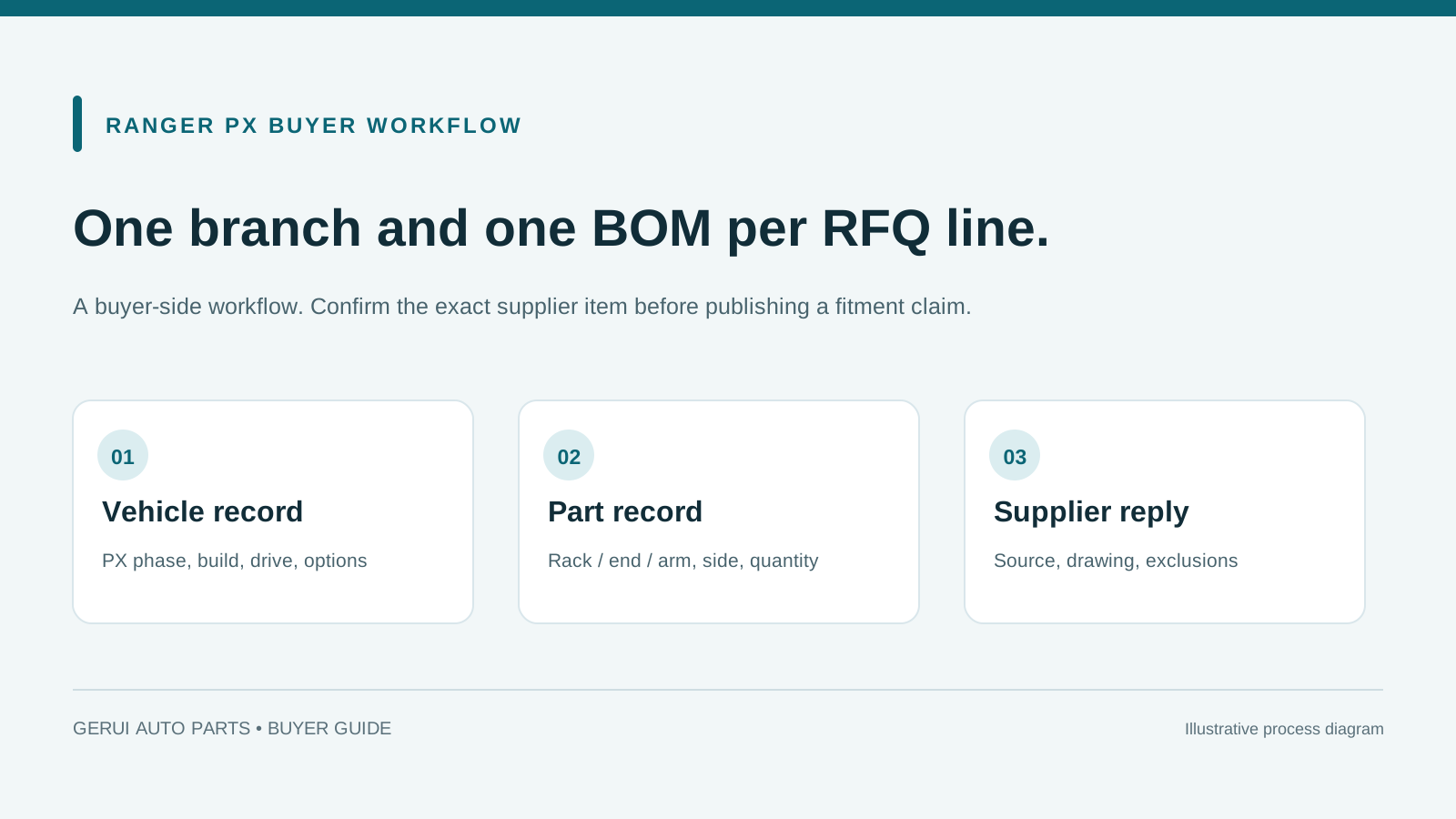
“Ford Ranger PX” may be enough to begin a conversation, but it is too broad to approve a replacement part. A distributor may receive a vehicle year from one customer, a PX label from another and an OE number from a supplier. If you merge those records without checking the vehicle branch, a quote can look complete while its application remains unresolved. This guide gives you a practical way to collect Ranger PX1, PX2 and PX3 information before comparing steering or suspension suppliers. It is an enquiry method, not a cross-reference table for unverified parts.
Start with the vehicle record, not a memorised year range
The Ranger Wreck fitment guide separates PX1, PX2 and PX3 and advises a VIN or build-date check when a part is uncertain. It is a used-parts seller’s guide, so its compatibility statements must not become Gerui product claims. Its useful lesson is that a sales year or “PX” label alone may not resolve a component question.
For each potential line item, ask your buyer for the destination market, model/series, production month, chassis or VIN reference, RHD/LHD, 2WD/4WD, body type and any relevant steering or suspension options. You can keep sensitive vehicle identifiers in the buyer’s private RFQ record. If the buyer has only an old-part photograph, ask for the label and installation position as well. Leave unknown fields visible instead of filling them from a neighbouring model.
Split steering and suspension into exact enquiries
One Ranger PX quotation should not mix a rack end, outer tie-rod end and lower control arm under the same “front-end part” label. Create a line for each product family:
| Enquiry line | Identity to specify | Extra comparison field |
|---|---|---|
| Steering rack or rack end | Rack identity, inner/outer position and old-part number | Drawing, thread/length information and RHD application statement. |
| Outer tie-rod end | Left/right side and connection position | Product label, key dimensions and whether hardware is included. |
| Upper or lower control arm | Upper/lower, left/right and assembly type | Ball joint/bushing contents and standard or modified ride-height scope. |
| Stabilizer link or bushing | Axle, link position or bar location | Link geometry or bushing size and kit quantity. |
You should ask suppliers to quote one vehicle branch and one defined bill of materials per line. A supplier can propose alternatives, but it should state the branch and the reason for each substitution. The Ranger PX vehicle programme links the relevant categories; it does not remove the need for a product-level check.
Ask where the fitment claim came from
For a candidate part, request the catalogue entry or OE cross-reference with its revision date, the supplier’s controlled drawing, the actual product code and a labelled sample photograph. If the supplier offers an earlier and later version, require a written explanation of the boundary and its source. A copied marketplace title is not a satisfactory answer to a PX1/PX2/PX3 difference.
This approach matters most when one source names a broad vehicle year range and another splits the application. Record the disagreement as a question to resolve. Do not combine the two ranges into a bigger claim. If a technical buyer can inspect a sample, compare it against the agreed drawing and old part for the named vehicle branch before approving a trial quantity.
Compare quotes only after the application scope matches
A low unit price may describe a bare component while another quote includes a pair, bushes, hardware or private-label packaging. Use the control-arm BOM checklist where a complete arm is involved. For each supplier, capture the same part identity, side, quantity per vehicle, packaging specification, sample terms, production lead-time basis and proposed claim procedure. If any fitment evidence is pending, mark the quotation as provisional and keep it out of an approved buyer line card.
You can also separate the first trial from later range expansion. Begin with branches for which the buyer can provide vehicle and old-part evidence. Add new applications only when their product records have been reviewed. This reduces the chance that a convenient broad catalogue label becomes an unsupported promise across the entire Ranger PX family.
Questions buyers commonly need to resolve
Can PX1, PX2 and PX3 share the same steering part? A particular supplier product may list more than one phase. You still need that exact item’s application source, configuration limits and physical evidence; do not infer a rule for the whole category.
Can I quote from a registration year alone? Use it to begin the search, then confirm build date and vehicle identifiers before approving a part.
Is an OE cross-reference enough? It is a useful starting point. Check its source, revision, side and whether the proposed aftermarket item matches the named application.
What if two suppliers list different year breaks? Ask each for its underlying catalogue or engineering source. Keep the disputed branch pending until you can reconcile it.
Should modified vehicles use the same RFQ? Record the modification and intended replacement scope explicitly. Standard replacement fitment should not be assumed to cover a lifted setup.
Send a Ranger-specific RFQ
When you are ready to source, send your vehicle branch, exact part family, installation position, old-part or OE reference, target quantity and packaging need through the Gerui RFQ form. Ask for separate pricing and evidence for each proposed branch. Gerui can assess a sourcing request; fitment, available configurations and commercial terms require confirmation for the quoted SKU.