An aftermarket catalogue may say a part fits a Hilux, Ranger or Prado, but that does not answer whether it suits a vehicle with a suspension lift. If you are buying standard replacement steering and suspension parts for a distributor, you need to know the vehicle’s current setup before you approve a fitment claim. A modified vehicle may have different geometry, supporting components or intended operating conditions. This guide shows how to record that state, define the product scope and decide when to seek technical confirmation. It does not certify a modification or promise compatibility for an untested SKU.
Establish the vehicle’s current state
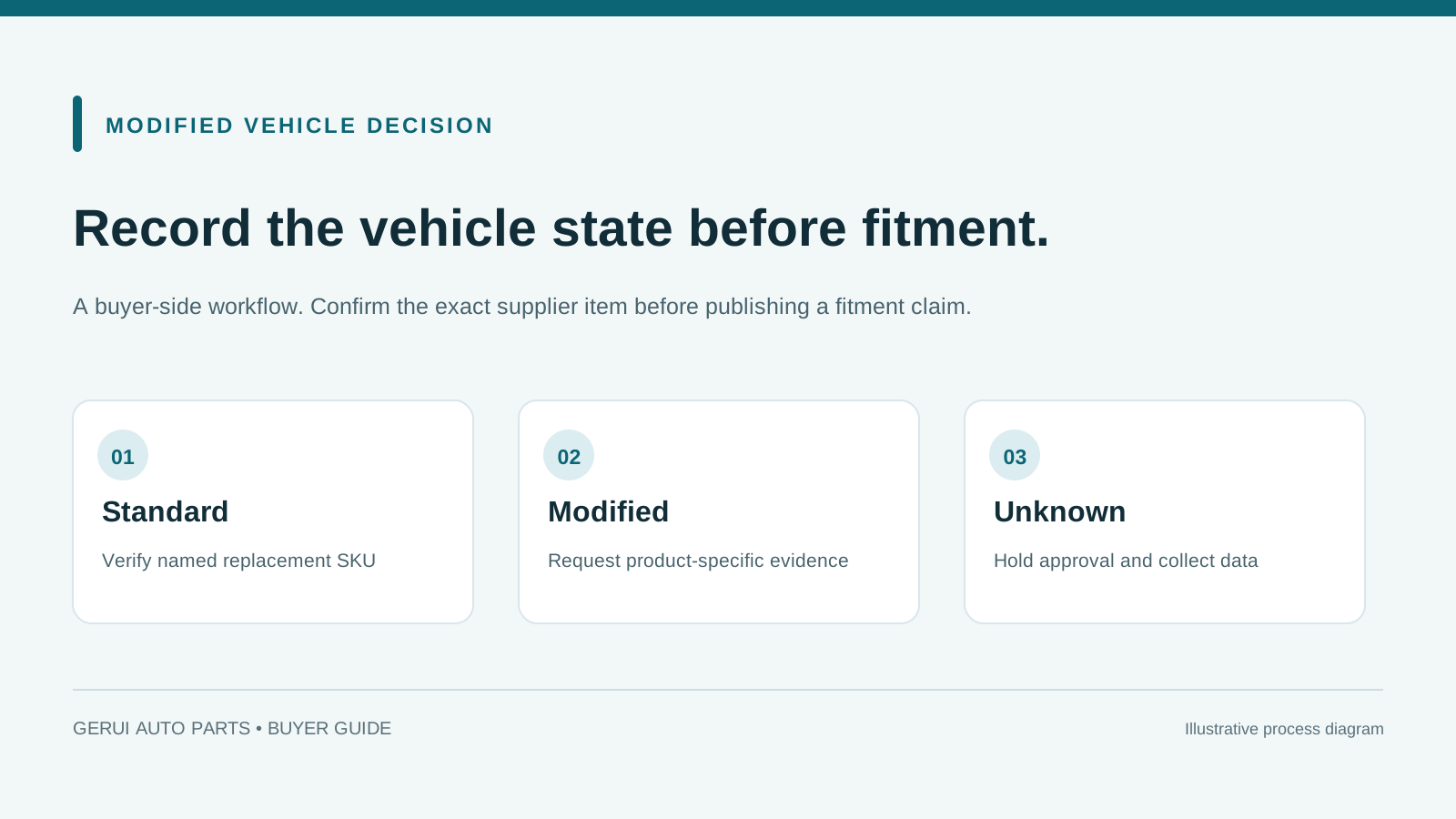
Use three states in your application record: standard ride height verified, modified setup documented, or status unknown. A buyer’s vehicle model and year cannot substitute for this field. If the vehicle has been modified, record the stated lift, relevant installed parts and whether the intended purchase is a like-for-like replacement or part of a new upgrade. Ask for the old component label and an installer or supplier record where available.
| Current state | What you can do next | What you should not assume |
|---|---|---|
| Standard setup verified | Check the proposed standard replacement SKU against the named vehicle branch. | That every model-year variant shares the same part. |
| Modified setup documented | Ask the product manufacturer or qualified installer about that exact configuration. | That a standard replacement listing includes the modification. |
| Setup unknown | Hold the application and collect more data. | That a photograph or tyre size fully describes the suspension. |
You should still verify axle, side, build month, RHD/LHD where relevant and the exact part family. The Gerui fitment and quality framework lists the broader evidence questions to ask before a part moves toward a trial range.
Read a fitment claim at the level of the actual SKU
A supplier may offer a standard replacement arm and a separate adjustable arm aimed at lifted vehicles. Both can mention the same model, but their intended applications differ. The same distinction can apply to springs, dampers and supporting hardware. Ask which ride-height and load conditions the exact proposed product is designed for; a general model listing does not establish that Gerui’s standard replacement parts cover those modifications.
For a proposed item, request the manufacturer’s application statement, drawing, dimensions, installed position and exclusions. If the seller says “fits lifted vehicles,” ask which product version, height range and supporting parts that claim assumes. If it cannot answer, keep the claim conditional. An unsupported broad listing creates a return risk for the importer as well as for the installer.
Keep legal and technical questions in their own lanes
Australian modification rules vary by jurisdiction and vehicle circumstances. The NSW suspension and ride-height manual, first published in 2016, is a state-specific reference rather than proof of the current rules for every vehicle. Check the latest requirements for the vehicle’s registration jurisdiction and seek the appropriate professional assessment. A supplier part listing cannot by itself establish legal approval for a modified vehicle.
Separately, technical suitability must be evaluated for the particular part and vehicle configuration. Ask whether the proposed product’s geometry, mounting points and intended operating range are supported by product-level documentation. A good catalogue record keeps the legal review, installer judgment and supplier fitment evidence distinct, so one does not masquerade as another.
Make the RFQ explicit about the modification
For a standard vehicle, quote the named standard replacement application only after checking its product evidence. For a modified vehicle, state the modification in the RFQ and ask the supplier to confirm whether its proposed SKU covers it. You may need a different component or may have to decline that application. A buyer should not discover that limitation after placing the first mixed-SKU order.
The Hilux N80 vehicle programme and other vehicle pages can help you select a sourcing category. They are navigation points; the final fitment decision still belongs to the exact vehicle and part record.
Questions for a category manager
Does a 4WD model listing include lifted examples? Only if the exact product documentation says so for the relevant configuration. Record the stated conditions.
Can I use an adjustable-arm product claim for a standard arm? No. They are different SKUs with different intended uses.
Is lift height alone enough to select a tie-rod or control arm? No. It is one field; you also need the vehicle branch, existing components, position and manufacturer evidence.
Can a supplier certify that a whole vehicle modification is legal? A part supplier’s fitment statement does not replace the applicable registration and engineering assessment.
What should my line card say when modification status is unknown? Keep the application conditional and tell buyers which vehicle and product details are needed to resolve it.
Quote only the supported scope
When you send a Gerui RFQ, state whether the vehicle is standard, modified or unknown; add its configuration, old-part or OE reference, intended repair and quantity. We can review sourcing feasibility and ask the supplier for product-level evidence. Until that evidence exists, no specific lifted-vehicle compatibility, certification or supply term should be treated as confirmed.