When an automotive parts quotation says “FOB” or “CIF,” the three-letter term alone is not enough to compare landed cost or delivery responsibility. Buyers need the named place, the applicable Incoterms® 2020 rule, the product and packaging scope, and a separate breakdown of costs that the rule does not price.
This guide compares EXW, FOB, CIF, and DAP for B2B aftermarket parts enquiries. It is a commercial checklist, not legal or customs advice. Confirm the sale contract, route, insurance, import requirements, and final wording with your freight forwarder and advisers.
Quick comparison
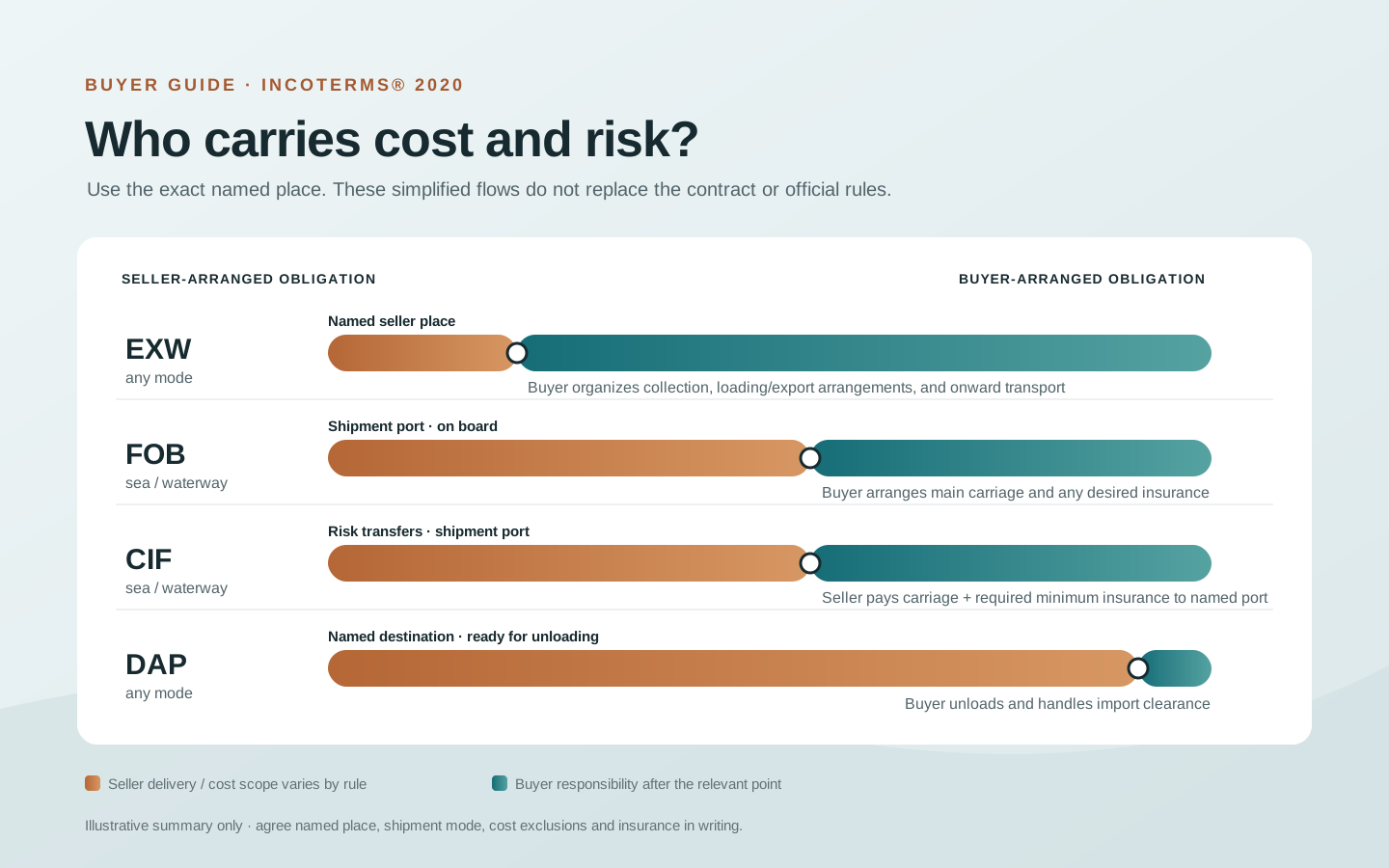
EXW: seller makes goods available at the named place; buyer takes on most collection, loading, export, carriage, and import tasks. FOB: for sea or inland-waterway transport; seller delivers the goods on board at the named shipment port. CIF: for sea or inland-waterway transport; seller arranges and pays carriage and required minimum insurance to the named destination port, while risk transfers when goods are on board at the shipment port. DAP: seller bears cost and risk to the named destination, with goods ready for unloading; buyer handles import clearance and unloading.
EXW: collect from the named seller location
Under EXW (Ex Works), the seller makes the goods available at the agreed place, such as a named factory or warehouse. The buyer arranges collection and generally carries the main transport and export/import responsibilities. The exact point matters: “EXW China” is not a sufficiently precise handover location for costing.
For an overseas buyer, confirm who can legally complete export formalities, whether the seller will load the collecting vehicle, and what origin handling or documentation charges may arise. ICC guidance notes that FCA may be more appropriate where the buyer cannot handle export clearance or where seller loading needs to be included. Ask your forwarder before treating EXW as the cheapest option.
FOB: delivery on board at a named port
FOB (Free On Board) is intended for sea and inland-waterway transport. The seller delivers when the goods are placed on board the vessel nominated by the buyer at the named port of shipment. The buyer arranges the main carriage and insurance if required. Risk transfers at the delivery point defined by the rule, even though the buyer’s final destination may be far away.
Write the exact port and version, for example “FOB [named port], Incoterms® 2020,” then ask which origin charges are included in the quoted amount. Clarify container handover and terminal arrangements with the forwarder; where goods are handed to a carrier at a container terminal before loading on the vessel, FCA may better match the actual delivery process. Do not compare a factory-gate figure with a port-loaded figure as if they cover the same service.
CIF: seller pays freight and minimum insurance to a named port
CIF (Cost, Insurance and Freight) is also limited to sea and inland-waterway transport. The seller contracts and pays for carriage and insurance to the named destination port, but delivery and risk transfer take place when the goods are on board at the shipment port. The destination in “CIF [port]” is the port to which the seller arranges and pays carriage; it is not the point where transit risk transfers.
Under Incoterms® 2020, CIF requires the seller to obtain the prescribed minimum insurance cover, subject to the rule’s terms. A buyer that needs broader cover should agree it expressly or arrange additional insurance. Request the insurance certificate, insured value, exclusions, claim contact, shipment details, and the exact freight and destination charges included. Port-to-port freight does not automatically include destination terminal handling, customs clearance, duties, or delivery to your warehouse.
DAP: delivered to a named destination, ready for unloading
DAP (Delivered at Place) can be used for different modes of transport. The seller arranges carriage and bears risk to the named destination, where the goods are placed at the buyer’s disposal on the arriving means of transport, ready for unloading. The buyer is generally responsible for unloading and import clearance, including applicable duties and taxes.
Specify a usable delivery point, not just a country or city. Ask whether the rate includes export clearance, origin handling, main carriage, destination transport, and any accessorial charges. Confirm who books and pays unloading, customs brokerage, import duties, taxes, and any inspection or storage that may apply. DAP does not mean the seller pays every import-side charge.
Compare the same shipment scope
| Term | Transport use | Seller’s key delivery point | Buyer’s main checks |
|---|---|---|---|
| EXW | Any mode | Goods made available at the named place | Loading, export clearance, collection, all carriage, insurance, import and unloading |
| FOB | Sea / inland waterway | Goods on board at the named shipment port | Main carriage, insurance choice, destination charges, import and onward delivery |
| CIF | Sea / inland waterway | Goods on board at shipment port; seller pays carriage and minimum insurance to named destination port | Risk transfer, insurance scope, exclusions, destination charges, import and onward delivery |
| DAP | Any mode | Named destination, ready for unloading | Unloading, import clearance, duties/taxes, and any excluded destination costs |
The rule allocates delivery obligations, risk, and certain costs; it does not establish the parts specification, price, payment method, ownership transfer, remedy for defects, or every local regulatory requirement. Those points need separate written agreement.
Build a comparable landed-cost request
- Freeze the product scope. List each part number or agreed reference, vehicle/application boundary, side and position, kit BOM, quantity by SKU, packaging, labels, and any required documents. Do not compare prices for different kit contents.
- Name the rule and place. State the rule, exact named location, and version: “DAP [full delivery point], Incoterms® 2020,” for example. Confirm the route suits that rule.
- Request a cost map. Ask the supplier to identify included and excluded amounts for origin pickup, export clearance, origin handling, freight, insurance, destination terminal, customs brokerage, duties/taxes, unloading, and final delivery. Some items depend on the forwarder and destination; label them as estimates until confirmed.
- Separate risk from payment. Record the contractual delivery/risk point, who arranges insurance, what cover applies, when payment is due, and the documents required. “Freight prepaid” does not by itself tell you when risk transfers.
- Check the shipment assumptions. Confirm carton count, dimensions, gross weight, stackability, cargo-ready date, port pair or delivery point, transit estimate, quotation validity, and who pays for delays, storage, or re-delivery.
RFQ fields for an automotive parts quote
Include destination country and postcode, preferred delivery point, shipment mode if known, quantity by SKU, carton or pallet requirements, private-label needs, delivery deadline, and preferred Incoterm. Ask the supplier to quote the same application and BOM under one named term, and to list any optional alternative separately. For a first order, compare sample and inspection arrangements, batch identification, packaging approval, warranty and claim terms alongside freight.
Common quotation traps
- Using “CIF Australia” without naming a port or stating the Incoterms® edition.
- Assuming CIF moves risk to the destination port because the seller pays freight there.
- Using FOB for a shipment that is actually containerized and handed to the carrier before vessel loading without checking whether FCA fits better.
- Treating DAP as including import duty, tax, customs clearance, or unloading.
- Comparing EXW unit pricing with DAP pricing without adding the buyer’s collection, export, freight, insurance, destination, and handling costs.
- Leaving terminal, documentation, security, storage, or delivery surcharges outside the comparison.
Questions to send with your RFQ
- Which Incoterms® 2020 rule and exact named place does this price use?
- Which origin, freight, insurance, terminal, documentation, and delivery charges are included or excluded?
- For CIF, what insurance certificate, coverage, insured value, exclusions, and claims process are provided?
- For DAP, who handles import clearance, duties/taxes, unloading, and destination storage?
- What shipment dimensions, weight, cargo-ready date, routing, and transit assumptions support the offer?
- Does the quoted product scope match the same part references, application, BOM, packaging, and quantities?
Incoterms® are ICC rules. Review the International Chamber of Commerce overview of Incoterms® 2020 and consult the full official rules and a qualified freight or trade professional for a transaction-specific interpretation.
Related buyer resources
Request a comparable automotive parts quotation
Send the part references, application, BOM, quantities, destination postcode, packaging needs, and preferred delivery term. We will identify missing fields before comparing supplier offers.