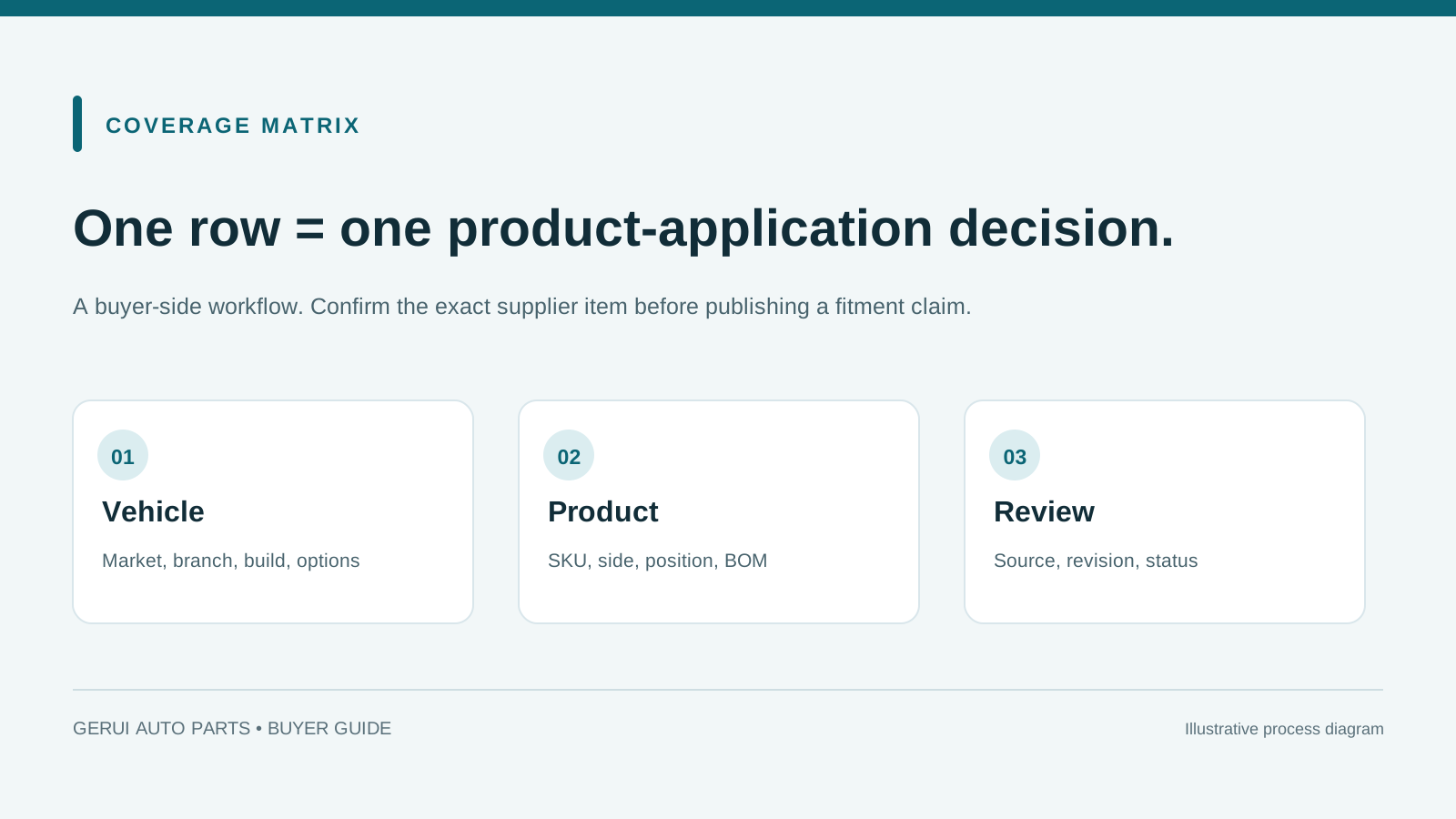
A long list of steering and suspension SKUs can look like strong market coverage, yet it may hide uncertain vehicle branches, duplicate references and parts that have never been checked as a complete kit. If you manage an Australian aftermarket range, you need a way to see exactly which application each line serves and what evidence supports it. A vehicle coverage matrix gives your purchasing and catalogue teams one reviewable record for those decisions. It also tells you where to start a small trial order and where to keep an attractive candidate out of the published line card.
Define one row as one application decision
Do not use one row for “all Hilux N80” or “all Ranger PX” if different build dates, steering configurations or positions remain unresolved. A useful row connects one supplier product to one named vehicle branch and installation position. You can add another row when the same product is proposed for a second branch, with its own source and status.
The Auto Care Association’s ACES overview shows why structured vehicle attributes, product classifications and qualifier statements matter when aftermarket companies exchange fitment data. ACES is a data standard reference; it is not a claim that your Australian business must use it or that a spreadsheet is ACES-compliant. For a new trial range, a controlled table can be a practical first step.
Keep vehicle, product and evidence fields apart
| Record group | Minimum fields to start with | Why it deserves its own columns |
|---|---|---|
| Vehicle | Destination market, make, model, generation, build range, chassis, RHD/LHD, drive and relevant options | A broad model label cannot carry every exclusion. |
| Product | Supplier code, part family, axle, side, position, OE reference and complete bill of materials | A fitment claim is meaningless if the quoted item is unclear. |
| Evidence | Source type, source URL or file, revision date, drawing, sample result and reviewer | You need to know why a row was approved or held. |
| Commercial | Quoted MOQ, packaging, lead-time basis, Incoterm and quote date | Terms change; keep them separate from the fitment record. |
| Publication | Internal status, approved wording, owner and last review date | A candidate should not become a public claim automatically. |
You can start with only the vehicle and product fields that your buyer and supplier can support. Leave blanks visible. Never create a full-year coverage claim by filling a spreadsheet downward from one retail listing.
Use an evidence status that has a clear meaning
Four simple states can prevent accidental publication: candidate, conflict, sample or supplier confirmation pending, and approved for a named application. Define who can change a status and what documents are required. “Approved” should refer to a specific SKU and vehicle branch, not an entire vehicle family. If an OE reference changes or a drawing is revised, retain the old source and record which rows need review.
This is especially useful when two public catalogues disagree about a left or right part. The Gerui OE cross-reference guide explains the questions that should be answered before a reference enters a buyer catalogue. You can keep the conflicting row internal while still seeking an answer from suppliers.
Select a small trial range from supported rows
Begin with applications that a buyer can describe precisely and a supplier can answer with a complete product record. Then assess the number of credible supply sources, sample availability, drawing quality, packaging requirements and likely claim exposure. An internal list of twenty possible SKUs is a research queue, not a sellable range by itself. A smaller trial with clear application boundaries may reveal more than a large collection of uncertain product pages.
When you compare two sources, make sure they quote the same position, side and bill of materials. For a complete repair kit, check every included item rather than approving the set because one component appears in a catalogue. Keep the accepted quote version and sample record linked to the matrix row.
Publish a line card only from reviewed records
Your website and buyer PDF should show the coverage you can explain and support. A matrix can generate links from a vehicle programme to a relevant category or product enquiry page, while unpublished rows remain internal. If a supplier later changes a part number, review the affected pages and quotations before updating them. Version control is part of commercial trust: a buyer can see which application was quoted and what changed.
Questions to ask before you expand the catalogue
Is a single OE number enough for a vehicle row? No. Add the source, version, position and relevant vehicle branch, then verify the proposed aftermarket SKU.
Can a candidate SKU appear on the public website? Only with wording that accurately describes its unverified sourcing scope. Do not present candidate fitment, stock or price as approved facts.
How should I record a supplier disagreement? Keep each claim with its source and date, mark the row in conflict and request a drawing or sample-based explanation.
Do I need specialist software from day one? You can begin with a controlled table if ownership, revisions and evidence links are clear. Choose software when the data volume and buyer requirements justify it.
When do I add a second vehicle to one SKU? Add a separate application row and review its own evidence rather than assuming that shared architecture proves interchange.
Use the matrix to request comparable quotes
If you are starting a small range, send the rows you want to validate through the Gerui RFQ form. Include the destination market, named vehicle branches, part families, positions, target quantities and packaging needs. Gerui can assess sourcing feasibility and request supplier records for those rows. A row becomes a firm offer only when the product application and commercial terms are confirmed.